

















Self-sufficiency check: Which solar setup is right for your van?

In this self-sufficiency check, we show you the three most common solar setups and help you figure out which system is the best solar power system for your needs.
Which solar setup is right for your camper?
You wake up in the morning at a secluded mountain lake in the Engadin or tucked away in a side valley in Ticino. You make yourself a fresh cup of coffee, the lights are on, the cool box is humming quietly – and you know that you can stay here for days without spending a single cent on shore power.
This is the ultimate van life feeling. And the key to it is the right camper solar system.
But anyone who converts their van is quickly faced with a mountain of questions. Which panel is the right one? Should I glue, screw, or fold? And what exactly is this inverter all about?
In this self-sufficiency check, we show you the three most common solar setups and help you find out which system is the best solar system for campers for your needs.
Request a quote now
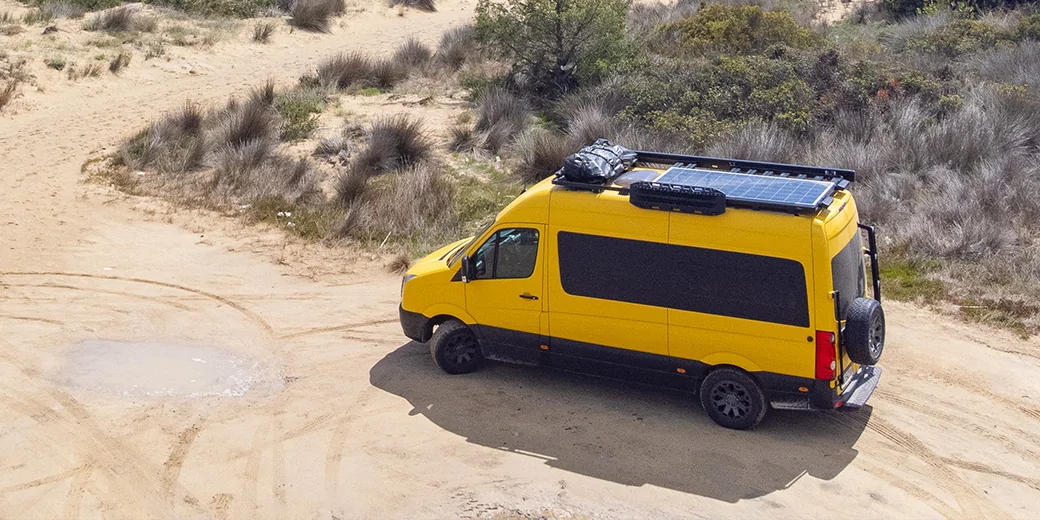
2. Stealth mode: Flexpanel with aluminum core
Do you have a VW T6 California with a pop-top roof or simply do not want everyone to immediately notice that you sleep in your car? Then flat flexible panels are your first choice.
Important: Standard flexible panels often have the problem that they overheat on hot metal roofs and the layers start to separate (delamination). That is why at AutoSolar we use flexible panels with an integrated aluminium core (ETFE coated). The aluminium core dissipates heat more effectively and makes the panel extremely durable.
Advantages Alu Flex:
- Whisper-quiet aerodynamics: With only a few millimetres of thickness, they follow the curvature of the roof. No wind noise and no increase in fuel consumption.
- Weight: They weigh only a fraction of a framed panel – perfect for pop-top roofs where the gas struts cannot carry too much additional weight.
- Invisible: From below, the camper solar system is practically invisible (stealth camping).
Disadvantages Alu Flex:
- Heat build-up: Because they are glued across the entire surface, there is no rear ventilation. At 35°C in direct sunlight they produce slightly less power than a raised aluminium-frame panel.
- No turning back: Fully glued means fully glued. Replacing the panel later is significantly more complicated.
👉 Conclusion aluminium-core flex panel: The best camper solar system for small vans, pop-top roofs and design-focused travellers who care about vehicle height and aesthetics.
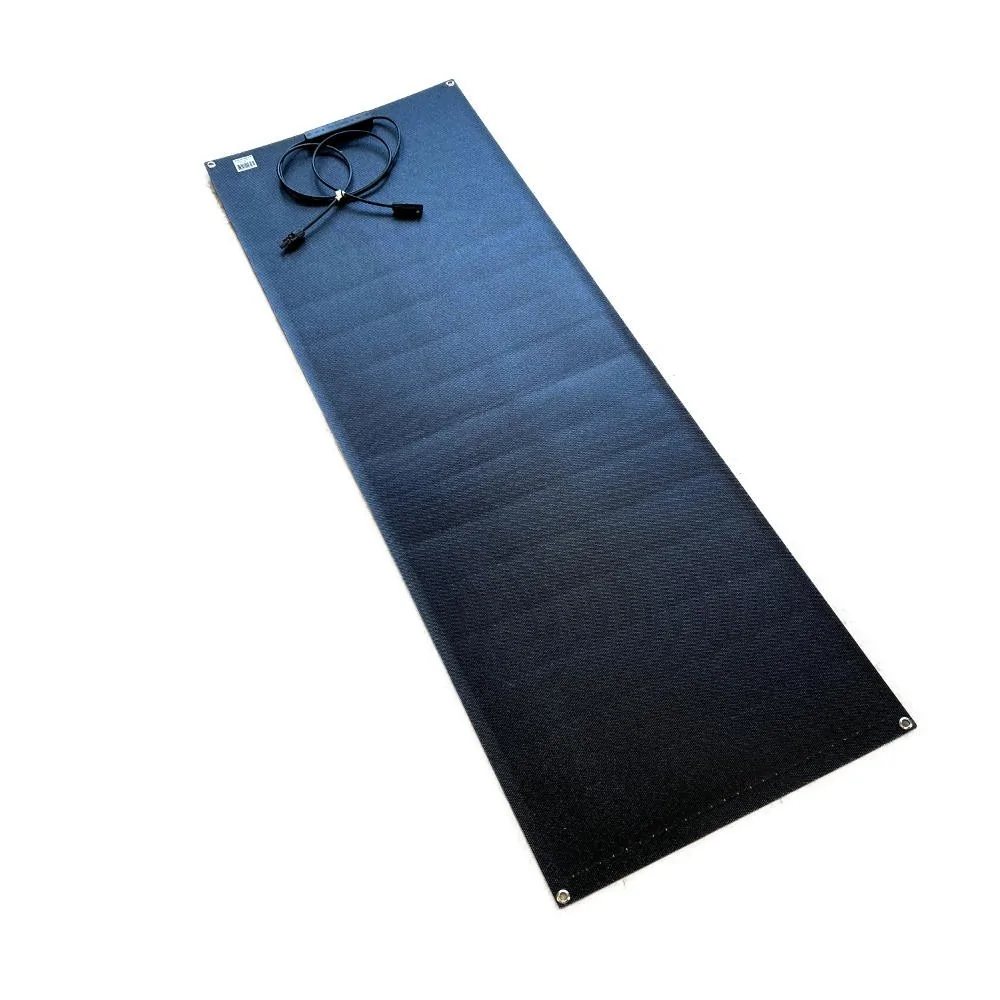
160W solar panel with aluminum core – robust and powerful
4. The big question: Inverter – yes or no?
Now you have power on the roof (or in the meadow) and in the battery. But what do you actually do with it? This is where the vanlife community tends to split over one device: the inverter.
An inverter converts the 12V direct current from your onboard battery into 230V alternating current – exactly the same type of power that comes from your household socket.
When you do NOT need an inverter:
If you travel in a minimalist setup.
Your phones, tablets and camera can be charged via 12V USB sockets (preferably USB-C PD). The lights run on 12V. Modern compressor coolers also connect directly to 12V.
The advantage: you save the cost of the inverter, save space and most importantly save energy. Every inverter has a standby consumption. If you convert 12V to 230V only to let your MacBook power adapter convert it back down to 20V again, you lose unnecessary energy in the process.
When you ABSOLUTELY need an inverter:
The best camper solar system is useless if you cannot use your favourite household devices. You need 230V for:
- The coffee machine: Whether Nespresso or an espresso machine – they require a lot of power for a short time (often 1500W+).
- Hair dryer & straightener: Without 230V your hair stays wet.
- E-bike batteries: Most e-bike chargers only work with 230V.
- Hand blender, induction cooker or a large monitor for your home office.
Our tip for 2026:
If you install an inverter, choose a model with a pure sine wave. Cheap devices with a “modified sine wave” can damage the sensitive electronics in laptops and chargers over time. Do not underestimate the required power: if you want to run a 1500W coffee machine, your inverter should provide at least 2000W continuous output.
Conclusion: Your energy, your rules
There is no such thing as the perfect camper solar system – there is only the setup that perfectly suits your travel style.
The long-term traveler in a Sprinter van installs sturdy aluminum frame panels on the roof and a 2000W inverter in the garage.
Still unsure which system is best for charging your battery?
We're happy to help you put together your dream setup. Use our AutoSolar solar calculator for your individual needs, or simply give us a call. We'll get your camper ready for unlimited freedom!
Request a quote now
Related posts
 Für alle, die keine feste Solaranlage installieren wollen. Mit "@thepeanutsideoflife" quer durch Europa: Unser Leben im selbstausgebauten Van Klein aber Oho! Der Solargenerator 300W Autark reisen, so geht's. 3D Drucken mit Solarstrom